





QIC Initiatives
Quality Improvement Initiatives
The QIC is central to our mission of maintaining academic and operational excellence. To ensure stakeholders (students, faculty, and regulatory bodies) understand our commitment to quality, we need to provide detailed content for the following areas:
Key Initiatives & Strategic Functions
1. Internal Quality Audits & Reporting The QIC spearheads the systematic review of all internal academic and administrative processes. By conducting regular quality activities and meticulous report preparation, we ensure transparency, consistency, and a proactive approach to institutional growth.
2. Multi-Stakeholder Feedback Ecosystem We believe that quality is a collaborative journey. The QIC manages comprehensive feedback systems that capture the voices of our key stakeholders:
- Students: To enhance the learning experience and campus life.
- Alumni: To align our curriculum with latest technology trends.
- Employers: To ensure techno-managers who pioneer strategic technology leadership for a global environment.
3. Accreditation & Regulatory Compliance SCIT is committed to maintaining the highest levels of institutional recognition. The QIC provides end-to-end documentation support and strategic alignment for national and international accreditation frameworks, including NAAC and NIRF. We ensure that our quality benchmarks are not only met but exceeded, reinforcing SCIT’s position as a premier IT business school.
IPR Workshop
Intellectual Property Rights (IPRs) are legal rights that protect creations and/or inventions resulting from intellectual activity in the industrial, scientific, literary or artistic fields. The most common IPRs include patents, copyrights, marks and trade secrets.
The main purpose of intellectual property law is to encourage the creation of a wide variety of intellectual goods. To achieve this, the law gives people and businesses property rights to the information and intellectual goods they create, usually for a limited period of time. This gives economic incentive for their creation, because it allows people to benefit from the information and intellectual goods they create, and allows them to protect their ideas and prevent copying.These economic incentives are expected to stimulate innovation and contribute to the technological progress of countries, which depends on the extent of protection granted to innovators.
The intangible nature of intellectual property presents difficulties when compared with traditional property like land or goods. Unlike traditional property, intellectual property is "indivisible", since an unlimited number of people can "consume" an intellectual good without its being depleted.
By exchanging limited exclusive rights for disclosure of inventions and creative works, society and the patentee/copyright owner mutually benefit, and an incentive is created for inventors and authors to create and disclose their work. Some commentators have noted that the objective of intellectual property legislators and those who support its implementation appears to be "absolute protection". "If some intellectual property is desirable because it encourages innovation, they reason, more is better. The thinking is that creators will not have sufficient incentive to invent unless they are legally entitled to capture the full social value of their inventions”. This absolute protection or full value view treats intellectual property as another type of "real" property, typically adopting its law and rhetoric.
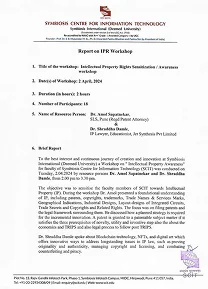
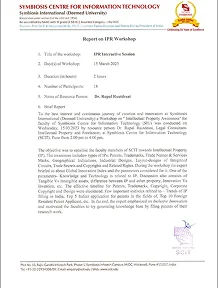
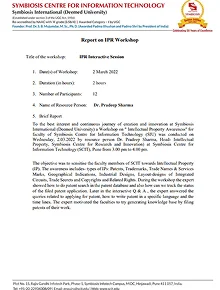
At SCIT, under the QIC initiatives we organize IPR workshops and sessions almost every year to create and encourage a sense of patent and copyrighting among the faculty members.

Emotional Wellbeing
"I think it’s really important to take the stigma away from mental health… My brain and my heart are really important to me. I don’t know why I wouldn’t seek help to have those things be as healthy as my teeth." —Kerry Washington, from HuffPost.
As the world around us is changing at an unprecedented speed, where old ways of thinking, doing, feeling, and sensing are continuously being replaced with new ways, where planned obsolescence is the norm of the time, people’s ability to adapt often falls behind. A country like India is fast moving away from its communitarian values to more individualistic ways. Here bullying, body shaming, and online abuse have become common phenomena. One is often torn between competing values that are continuously pulling us in opposing directions. Values espoused by the cinemas, mass media, social media, and the family may not always converge but create contradictions.
We live in a society where being fat, having dark skin, belonging to certain communities are stigmatized and stereotyped causing mental health issues. Symbiosis Center for Emotional Wellbeing (SCEW) continuously works with the students and teachers and other staff members to improve their mental health and help us to equip ourselves with the necessary skills to tackle emotional disturbances.
They publish regular newsletters and organize faculty development workshops on Emotional First Aid and the kind. The center also addresses the students every year during the induction and has a councilor on campus to whom students can reach out at any time.
Best Practices
Title of the Practice
The Quest
Goal
To provide a platform for enhancing the skills of the members of the academic community (members of Faculty and students) of SCIT for the purpose of research, discussion, scrutiny and expression. To equip them with critical thinking capability that facilitates their interactions with the outside research community.
The Context
At SCIT, it is believed that the effective learning culture relevant to higher education demands for high-end research activities and related communication. In turn, good quality research is possible only when there is an environment conducive to collective academic scrutiny and constructive scholarly criticism.
Development of such culture from scratch is not easy as it involves a conviction in the right intentions behind the critical analysis by others and also, in the benefits of such scrutiny. Convincing the Faculty members to come to the dais and talk about their research agenda had been a challenge, initially. Another challenge was about making the invisible incentive for sparing some time for preparation, delivery of and listening to research seminars, visible. This practice helped in overcoming these challenges early and has given successful results so far.
The Practice
Stakeholders: Members of Faculty and occasionally, student community, whenever suitable topic is taken up.
Description: The Quest is a monthly meeting of the stakeholders held for conducting research related seminars delivered by the members of SCIT Faculty, students or an invited guest. The topics are related to the doctoral research, or, any other research work the stakeholders are involved in; or, a workable research paper they wish to get scrutinized by their colleagues; or, discussion of a good quality published research paper (not necessarily written by them) that may have some value to the audience.
The Quest meetings are held every third Thursday of the month from 1:15 p.m. to 2:00 p.m. At times, these sessions do get extended due to the questions and answers which follow the seminar. This has been kept and followed as a voluntary practice but has been well accepted among the faculty and has inculcated a need and urge for collaborative research thereon.
Evidence of Success
The effect of the Quest initiative has been visible on several fronts including quality of research work (RRC assessments for Doctoral students) of Faculty members, number of research papers, quality of journals and conferences that publish the papers, classroom delivery and interactions, quality of students’ internship and dissertation, students performance in examination and different competitive events and eventually, recognition of SCIT as an institute of high academic credentials in academia as well as industry.
The size of audience has gradually increased, intensive interactions are visible and Faculty members have started volunteering for the seminars. Instead of six seminars in six months, the Quest organized eight such meets. A few informal and formal statements of appreciation have been received from about forty percent of the Faculty members. Supporting document containing the minutes of the Quest meetings is attached.
Problems Encountered and Resources Required
The only agenda of the Quest is to expose the researchers to scholarly scrutiny with an aim to enhance the academic rigor in research work and therefore, needs right quality of resources for the participants.
SCIT has ensured the whole academic community’s access to online journal databases like IEEE CS, EBSCO, CMIE and Emerald insights. Initially, it was difficult to get the speakers and audience for this voluntary activity. Senior members, including the Director, made it a point to attend these meetings without fail.
This made others also inquisitive about the benefits of attending the seminars thus resulting in improved and increased attendance. Another limitation encountered is that of the availability of time limited to meetings held just once in a month. It has been a task to get students to attend the same because of their regular sessions but would be addressed soon.
Notes
The Quest has evolved over the time. What was started as an activity for Faculty and interested students only has extended to external guests sharing their experiences and wisdom about the research with the audience. The institute is trying its best and will continue the same to keep us this best practice that can enrich many more researchers.
Gender Equality Workshops
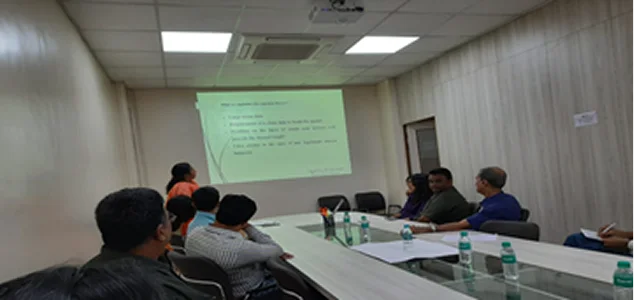
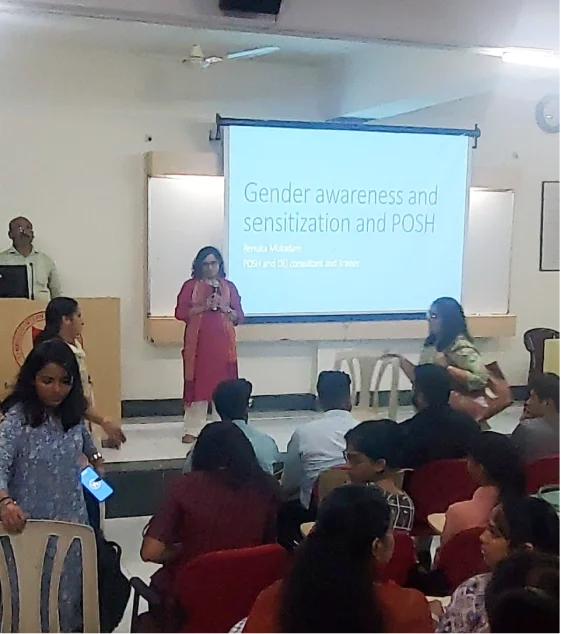
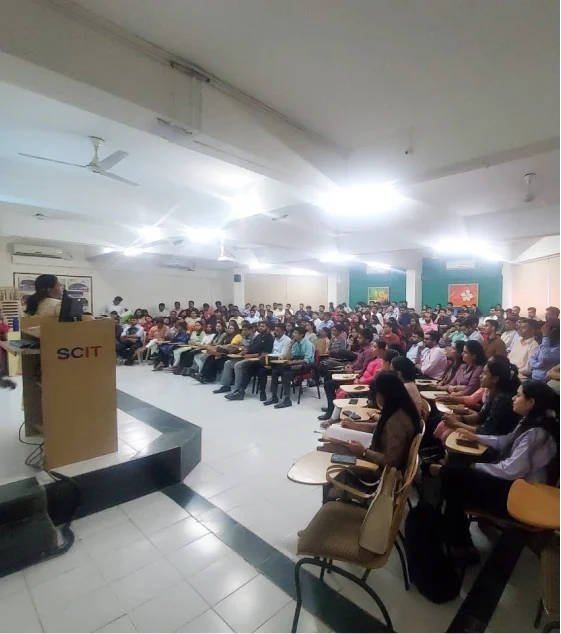
SCIT believes in creating a gender sensitive campus where we encourage to generate respect for the individual regardless of sex. Gender sensitization is achieved by nurturing awareness about gender equality which makes the students sensitive towards the other gender.
Institution shows gender sensitivity by organizing Gender Sensitization Workshop for students’ compulsory as part of their induction program. The workshop stresses on values like gender justice, gender equity and gender empowerment. Through this course the program resource person tries to treat the gender perceptions of students which arises from their socio economical background. It also make a strong point in student’s mind that any discrimination based on gender is a violation of the fundamental right of the other entity.
The discussions bring down the points such as misconceptions about suitability of a person for a particular activity both in professional and personal environment. SCIT also conducts gender sensitization workshops for faculty and staff with the aim of creating a gender sensitive society. Through the successful completion of this workshop consecutively for last four years, we could create a healthier gender sensitive environment in the campus.
We also conduct these types of programs for the faculty and non-teaching staff as and when require. Along with these training programs, we provide individual counselling for those in need as part of student mentoring program. Students and staff members benefit from these workshops and are made compulsory for the students during their induction program.
The resource person Ms. Renuka Mukadam, (BA, MSW) addresses the students regarding values like gender justice, gender equity and gender empowerment. With her expertise and knowledge, the sessions conducted delivered the projected value and the stake holders benefited from the proficiency of the speakers. After completing the the talk the students are encouraged to interact with the resource person and the discussions brings down the points such as misconceptions about suitability of a person for a particular activity both in personal and professional environment.
Quality Improvement Initiatives
Quality Improvement Initiatives
The QIC is central to our mission of maintaining academic and operational excellence. To ensure stakeholders (students, faculty, and regulatory bodies) understand our commitment to quality, we need to provide detailed content for the following areas:
1. Internal Quality Audits & Reporting The QIC spearheads the systematic review of all internal academic and administrative processes. By conducting regular quality activities and meticulous report preparation, we ensure transparency, consistency, and a proactive approach to institutional growth.
2. Multi-Stakeholder Feedback Ecosystem We believe that quality is a collaborative journey. The QIC manages comprehensive feedback systems that capture the voices of our key stakeholders:
- Students: To enhance the learning experience and campus life.
- Alumni: To align our curriculum with latest technology trends.
- Employers: To ensure techno-managers who pioneer strategic technology leadership for a global environment.
3. Accreditation & Regulatory Compliance SCIT is committed to maintaining the highest levels of institutional recognition. The QIC provides end-to-end documentation support and strategic alignment for national and international accreditation frameworks, including NAAC and NIRF. We ensure that our quality benchmarks are not only met but exceeded, reinforcing SCIT’s position as a premier IT business school.